Electrical safety in a power-generation facility is no longer just about personal protective equipment, arc-flash labels or the procedures employees follow while performing energized work. It also depends on the condition of the electrical equipment those employees operate and maintain.
That is why NFPA 70E and NFPA 70B must be addressed together.
NFPA 70E establishes electrical safe work practices intended to protect employees from shock, electrocution, arc flash and arc blast. NFPA 70B addresses the maintenance and condition of the electrical equipment itself. Together, the standards create a more complete approach to protecting people, maintaining critical assets and supporting reliable plant operations.
NFPA 70B Is Now a Standard
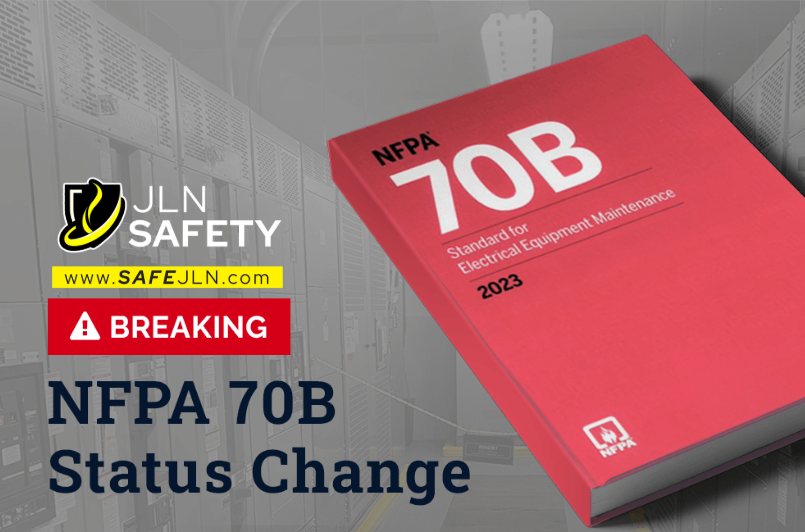
One of the most important changes for facility owners and operators came with the 2023 edition of NFPA 70B. What had previously been published as a recommended practice became the Standard for Electrical Equipment Maintenance.
That change is significant. NFPA 70B now uses mandatory language and establishes requirements for developing, implementing and documenting an Electrical Maintenance Program, or EMP. Whether specific provisions are legally enforceable at a particular facility can depend on applicable regulations, contracts, insurers, owners and the authority having jurisdiction. Regardless, the standard has changed the recognized expectation for how electrical maintenance should be managed and documented.
An effective Electrical Maintenance Program is not simply a collection of work orders or preventive-maintenance tasks. It is a structured, risk-based program that accounts for the facility’s actual electrical assets, their condition, their importance to operations and the hazards that may result if they deteriorate or fail.
What Does NFPA 70B Require From a Facility?
At a practical level, an NFPA 70B-aligned Electrical Maintenance Program includes:
- Identifying electrical equipment within the scope of the program
- Assigning ownership, authority and program responsibilities
- Prioritizing assets based on factors such as condition, criticality, operating environment and risk
- Establishing appropriate maintenance tasks and justified intervals
- Integrating manufacturer recommendations, equipment history and condition-based information
- Training and qualifying employees for the maintenance tasks they perform
- Documenting inspections, maintenance, testing and corrective actions
- Reviewing and evaluating the program at least annually
Many power plants already have valuable pieces of this system in place, including computerized maintenance management system records, thermography programs, preventive-maintenance schedules, one-line diagrams, original equipment manufacturer manuals, testing records and outage work histories. The challenge is ensuring those pieces accurately reflect the facility’s electrical asset base and function as one governed program.
A CMMS can provide a useful starting point, but it may not include every breaker, distribution component or electrical asset in enough detail. Equipment that has been modified in the field, omitted from drawings or recorded inconsistently can create gaps between the written program and actual plant conditions.
NFPA 70E Protects the Employee
While NFPA 70B focuses on equipment maintenance, NFPA 70E focuses on the employee and the way electrical work is performed.
Effective NFPA 70E training helps employees understand:
- How to recognize and assess electrical hazards
- How to establish an electrically safe work condition
- When energized work may be justified
- Shock and arc-flash risk assessments
- Approach boundaries and equipment labeling
- Selection, inspection and proper use of arc-rated PPE
- Energized electrical work permits
- Lockout/tagout and verification considerations
- The responsibilities of qualified and unqualified employees

These practices help facilities meet their obligation to protect employees from recognized electrical hazards and support compliance with applicable OSHA electrical-safety requirements.
Why NFPA 70E and NFPA 70B Must Work Together
A properly trained and qualified employee can still face increased risk if the equipment being operated or serviced has not been properly maintained.
NFPA 70E addresses how the employee should perform the work. NFPA 70B addresses whether the equipment is in a condition that supports that work being performed safely. Worker qualification and equipment condition are interdependent.
For example, deteriorated breakers, compromised cable terminations, malfunctioning protective devices, transformer problems or missed thermal anomalies can increase the potential for an electrical incident. These conditions may also contribute to equipment damage, forced outages and extended recovery times.
Connecting NFPA 70E and NFPA 70B can help a power-generation facility:
- Reduce employee exposure to electrical hazards
- Improve equipment reliability and facility availability
- Strengthen outage and maintenance planning
- Identify deteriorating assets before they fail
- Maintain retrievable training and maintenance records
- Prepare for questions from owners, insurers, auditors or regulators
- Demonstrate how electrical assets are identified, prioritized, maintained and reviewed
NFPA 70B should therefore be viewed as more than a documentation exercise. Implemented effectively, an Electrical Maintenance Program becomes part of the facility’s safety, reliability and asset-management strategy.
Training Is a Critical Part of the Program
NFPA 70E and NFPA 70B both place importance on having employees who understand their responsibilities and are qualified for the work they perform. A written procedure alone cannot demonstrate that employees are prepared to recognize hazards, follow safe work practices or complete assigned maintenance tasks correctly.
Training should reflect the employee’s actual role. Qualified electrical workers, maintenance personnel, operators, supervisors, safety professionals and employees who do not perform electrical work will not all need the same depth of instruction. The most effective programs connect the standards to the facility’s equipment, procedures, work practices and operating environment.
Facilities should be prepared to answer several important questions:
- Who is responsible for the Electrical Maintenance Program?
- What equipment is included in the program?
- How were maintenance tasks and intervals selected?
- Are equipment deficiencies documented and corrected?
- Are employees trained for the specific tasks they perform?
- Can the facility produce current training and maintenance records?
- Is the program reviewed and updated as conditions change?
If any of those answers are unclear, now is the time to identify the gap – before an electrical incident, forced outage, audit or insurance inquiry brings it to light.
Bring NFPA 70E and NFPA 70B Training to Your Facility
JLN Safety provides instructor-led NFPA 70E and NFPA 70B training for power-generation employees, qualified electrical workers, supervisors, maintenance personnel and safety professionals.
Training can be delivered at your facility and tailored to your:
- Electrical Safety Program
- Electrical Maintenance Program
- Equipment and operating environment
- Employee roles and assigned tasks
- Existing procedures and work practices
- Site-specific hazards and training objectives
Whether your organization needs to qualify electrical workers, improve electrical-safety awareness among other employees or help plant leadership understand its NFPA 70B responsibilities, JLN Safety can develop a program around your operation.
Are your employees – and your Electrical Maintenance Program – prepared?
Contact JLN Safety today to discuss on-site NFPA 70E and NFPA 70B training for your facility.
Call: 860-434-3443
Website: www.SAFEJLN.com
Training Center: 7 Vista Drive, Suite A, Old Lyme, Connecticut
This article provides general educational information and is not legal or regulatory advice. Requirements applicable to a particular facility should be evaluated based on current regulations, adopted codes, contracts and the authority having jurisdiction.
Leave a Reply