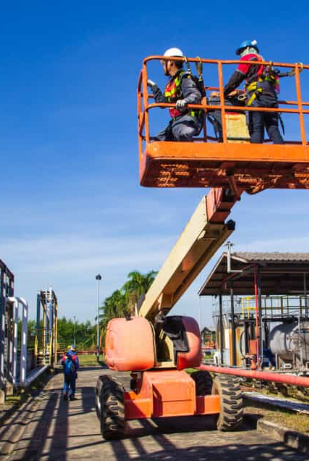
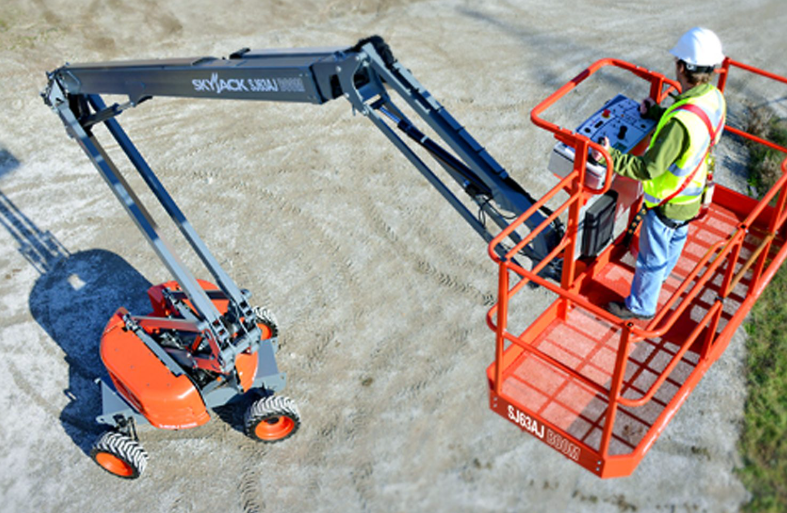
Aerial lifts play a critical role in construction, power generation, manufacturing, and industrial maintenance environments. From boom lifts and scissor lifts to articulating platforms, these machines allow workers to perform elevated tasks efficiently – but only when they are operated, inspected, and maintained correctly.
At JLN Safety, our Aerial Lift Safety Training goes beyond basic operator instruction. We focus on maintenance awareness, inspection requirements, and real-world safety protocols to help employers reduce incidents, equipment damage, and OSHA citations – while keeping workers safe at height.
Why Aerial Lift Safety Training Matters
Aerial lift incidents are rarely caused by a single failure. Most are the result of missed inspections, improper operation, poor maintenance awareness, or lack of training.
While equipment manufacturers provide operating manuals, it’s the employer’s responsibility to ensure workers understand:
- How lifts function
- What conditions make a lift unsafe
- When equipment must be removed from service
- How inspections and maintenance impact safety
This is where structured, compliant training makes the difference.
Understanding Aerial Lifts & Their Systems (What Operators Need to Know)
Aerial lifts rely on hydraulic, electric, or hybrid systems to raise and position workers at height. While operators are not expected to perform repairs, they must understand how these systems behave so they can recognize unsafe conditions.
Common aerial lift types include:
- Boom lifts (telescoping and articulating)
- Scissor lifts
- Vertical mast lifts
- Specialty industrial lifts
Each presents unique hazards related to movement, stability, hydraulic pressure, and fall exposure.
Common Aerial Lift Hazards Identified in the Field
During inspections, audits, and training evolutions, our safety professionals consistently encounter the same high-risk issues:
1. Inadequate Pre-Use Inspections
Missed leaks, damaged hoses, cracked welds, or malfunctioning controls can quickly escalate into serious incidents if not identified before operation.
2. Hydraulic System Failures
Contaminated fluid, worn seals, or damaged lines can cause:
- Uncontrolled movement
- Sudden lowering
- Boom drift or instability
Operators must know what abnormal behavior looks like and when to stop work immediately.
3. Improper Platform Security
Missing guardrails, unsecured gates, or modified platforms significantly increase fall risk — especially when combined with lateral movement or uneven terrain.
4. Unsafe Operating Practices
Examples include:
- Operating beyond rated capacity
- Traveling while elevated
- Working too close to overhead power lines
- Improper descent speeds during emergency lowering
5. Lack of Qualified Operators
Training gaps remain one of the leading contributors to aerial lift incidents. Operators must be properly trained, evaluated, and authorized – not simply “shown how it works.”
Maintenance Awareness: What Operators and Supervisors Must Recognize
While OSHA does not require operators to perform repairs, they are required to recognize unsafe conditions and remove equipment from service when necessary.
Key maintenance-related red flags include:
- Hydraulic fluid leaks or contamination
- Frayed or poorly routed hydraulic lines
- Abnormal noises, vibrations, or jerky movements
- Warning lights, alarms, or control delays
- Structural damage to booms, platforms, or outriggers
Our training emphasizes what to look for, when to stop work, and how to report issues properly.
Aerial Lift Inspection Requirements (OSHA-Aligned)
Occupational Safety and Health Administration requires that aerial lifts be inspected and maintained according to manufacturer instructions and industry best practices.
Pre-Start / Daily Inspections Should Include:
Visual Checks
- Hydraulic leaks or damaged hoses
- Cracked welds, bent components, or corrosion
- Missing decals, placards, or warning labels
- Guardrails, gates, and access points
Operational Checks
- Lift, lower, and swing functions
- Emergency stop and emergency lowering controls
- Steering, brakes, and drive controls
- Alarms and limit switches
Safety Equipment
- Fall protection anchor points
- Harness and lanyard compatibility
- Operator manuals present and accessible
If any defect is identified, the lift must be tagged out and removed from service until corrected.
What Makes JLN Safety’s Aerial Lift Training Different
At JLN Safety, we don’t rely on slide decks alone.
Our Aerial Lift Safety Training is:
- Hands-on and scenario-driven
- Aligned with OSHA requirements and manufacturer guidance
- Taught by experienced safety professionals with real field experience
- Focused on inspection competency, hazard recognition, and decision-making
We train operators and supervisors to think critically, not just memorize rules — because real-world conditions are rarely textbook.
Final Thoughts: Safety at Height Starts Before the Lift Moves
Aerial lift safety doesn’t begin once the platform is elevated — it begins with training, inspections, and maintenance awareness long before the job starts.
Proper training:
- Reduces incidents and downtime
- Extends equipment life
- Protects workers and employers alike
If your organization uses aerial lifts in construction, power generation, manufacturing, or industrial environments, JLN Safety is ready to support your training needs.
👉 Contact JLN Safety to learn more about our Aerial Lift Safety Training programs or to schedule on-site or facility-based training.
Leave a Reply