


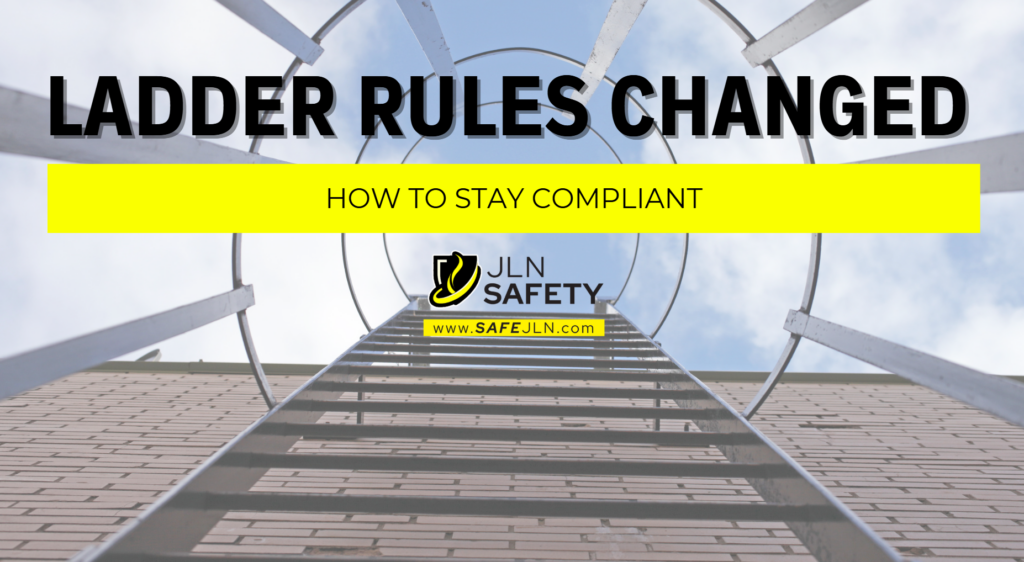
Workplace ladder safety in the United States has entered a new era. What was once considered “standard protection” is no longer enough – and in many cases, no longer compliant.
In 2016, OSHA introduced major updates to its Walking-Working Surfaces Standard, marking one of the most significant regulatory shifts in decades. These changes strengthened requirements for training, inspections, and fall protection – especially for fixed ladders.
If your facility has fixed ladders, now is the time to understand what’s changed, what’s required, and how to stay compliant.
What Changed in OSHA’s Ladder Safety Regulations?
One of the most impactful updates affects fixed ladders over 24 feet.
The key regulation:
- All fixed ladders installed after November 19, 2018 must be equipped with a personal fall arrest system (PFAS) or ladder safety system, such as a vertical lifeline.
- Traditional ladder cages are no longer considered sufficient fall protection.
For ladders installed before 2018, OSHA introduced a phased compliance plan:
- Employers have until 2036 to replace cages and wells with modern fall protection systems.
- However, any newly installed or replaced ladders must meet the updated standard immediately.
This shift reflects what safety professionals have known for years: cages don’t stop falls – fall arrest systems do.


Why Ladder Cages Are Being Phased Out
Ladder cages were originally designed to:
- Limit backward or sideways falls
- Provide a sense of containment
But real-world incident data has shown:
- Cages do not prevent downward falls
- Workers can still strike cage bars during a fall
- Serious injuries and fatalities continue to occur despite cage use
Because of these risks, OSHA no longer considers ladder cages a compliant standalone solution for fall protection on ladders over 24 feet.
The Safer Alternative: Personal Fall Arrest Systems
Today’s best practice for fixed ladder safety is the use of a ladder-mounted personal fall arrest system, most commonly:
- Vertical lifeline systems
- Rigid rail ladder safety systems
These systems:
- Allow workers to tie off before climbing
- Automatically arrest a fall within inches
- Greatly reduce injury severity
- Meet modern OSHA compliance standards
From a safety and liability standpoint, these systems offer far superior protection compared to ladder cages.
Are Ladder Cages Required Anymore?
No.
If a fixed ladder is over 24 feet and equipped with a compliant personal fall arrest system, ladder cages are no longer required – and in many cases, no longer recommended.
OSHA’s updated regulations have effectively phased out cages as a primary means of protection in favor of personal fall protection systems.
Do You Need to Remove Existing Ladder Cages?
OSHA does not strictly require you to remove an existing cage once a fall arrest system is installed – but there’s an important condition:
The cage may remain only if it does not interfere with the operation of the fall arrest system.
In practice, many safety professionals recommend removing cages because:
- They can delay or disrupt system activation
- They increase the chance of secondary injuries during a fall
- They complicate rescues
- They create confusion during inspections and audits
For these reasons, many organizations choose to remove ladder cages entirely once a vertical lifeline or rail system is installed – ensuring both maximum safety and system performance.
Why Waiting Until 2036 Isn’t the Best Strategy
Yes, OSHA allows until 2036 for older ladders to transition, but smart employers don’t wait for deadlines to protect their people.
Proactive upgrades deliver real benefits:
- Fewer injuries and near-misses
- Reduced workers’ comp exposure
- Lower liability
- Stronger safety culture
- Easier compliance during audits and inspections
- Better budgeting over time instead of last-minute retrofits
Forward-thinking organizations recognize that safety isn’t just about compliance: it’s about leadership and responsibility.
How JLN Safety Helps You Stay Compliant
At JLN Associates, LLC (JLN Safety), we help organizations:
- Assess existing fixed ladders
- Identify OSHA compliance gaps
- Recommend compliant fall protection solutions
- Coordinate inspections and system upgrades
- Support long-term safety planning
Whether you manage a power plant, industrial facility, municipal infrastructure, or commercial site, our team ensures your ladder systems meet today’s standards – not yesterday’s assumptions.
Final Thoughts
The rules around ladder safety have changed and the expectations have changed with them.
Ladder cages, once considered protective, are now recognized as outdated and insufficient. Today’s standard of care is clear:
Fixed ladders over 24 feet must be protected by personal fall arrest systems.
By upgrading now instead of waiting, organizations:
- Protect their workforce
- Strengthen compliance
- Reduce risk
- Lead by example
Safety isn’t about doing the minimum.
It’s about doing what works.
Call the team at JLN Safety, 1-855-SAF-EJLN or reach out through our website at info@safejln.com, www.safejln.com